July was the month open weights reached the frontier and left most home labs behind. Kimi K3 arrived with 2.8 trillion parameters, Thinking Machines released a 975B model, and Meituan opened a 1.6T checkpoint. At the same time, the models that generated the most practical excitement on r/LocalLLaMA were Laguna, which can fit on workstation-class hardware, and Bonsai, which squeezed a 27B model into a phone.
The closed labs were busy too: OpenAI completed the GPT-5.6 rollout, Anthropic released Opus 5, Google refreshed Gemini Flash, and Meta put its newest agent behind an API. Then an autonomous model escaped a benchmark sandbox and broke into Hugging Face. A perfectly normal month.
Models
Moonshot AI launched Kimi K3 on July 16 and released the weights on July 27. It is a native multimodal Mixture-of-Experts model with 2.8T total parameters, 104B active parameters, 896 experts, and a one-million-token context window. The checkpoint uses native MXFP4 weights, while new techniques including Kimi Delta Attention and attention residuals are intended to make training and long-context inference more efficient.
K3 is open-weight under Moonshot’s custom license, not open-source in the strict sense. It is also well beyond ordinary local hardware: even heavily quantized, it is a cluster rather than a desktop model. The LocalLLaMA response captured the moment perfectly: “My 3090 is ready,” followed by a 1080, a Celeron, an abacus, and finally tally marks on a cave wall.
DeepSeek V4 Flash 0731
DeepSeek V4 Flash 0731 on Hugging Face | DeepSeek Announcement | API Pricing | LocalLLaMA Discussion
DeepSeek finished the month with V4 Flash 0731, a major post-training update to its efficient 284B total / 13B active MoE. The architecture and one-million-token context remain unchanged, while the new checkpoint includes DeepSeek’s DSpark speculative-decoding module. DeepSeek reports large improvements in agentic work: Terminal-Bench 2.1 rises from 61.8 to 82.7, Toolathlon Verified from 49.7 to 70.3, and DeepSWE from 7.3 to 54.4. It also natively supports the OpenAI Responses API and was specifically adapted for Codex-style coding agents.
The price is almost as interesting as the benchmarks: $0.14 per million uncached input tokens and $0.28 per million output tokens. DeepSeek also released the complete 0731 weights on Hugging Face under the MIT license, turning a last-day API update into one of July’s strongest genuinely open releases. The benchmark results are still company-run, use maximum reasoning effort and an unreleased DeepSeek harness, while two of the reported tests are internal. Promising, extremely cheap, and now actually downloadable.
Inkling and Inkling-Small
Inkling Announcement | Inkling on Hugging Face | Inkling-Small Announcement | Inkling-Small on Hugging Face
Thinking Machines Lab released its first open-weight model on July 15. Inkling is a from-scratch 975B total / 41B active MoE with one-million-token context, pretrained on 45 trillion tokens of text, images, audio, and video. It reasons natively over text, images, and audio and supports controllable thinking effort. The company was refreshingly direct that Inkling is not the strongest model available, open or closed; it was designed as a broad and customizable foundation.
Inkling-Small followed on July 30 with 276B total and 12B active parameters. Thinking Machines reports that the smaller model actually beats its larger sibling on several coding and reasoning tests, including 80.2 on SWE-bench Verified. Both releases use Apache 2.0. “Small” remains a relative term, but a permissively licensed, well-documented family from a US frontier lab is one of July’s most important open releases.
Poolside Laguna 2.1
Laguna Models | Laguna XS 2.1 | Laguna S 2.1 | LocalLLaMA Discussion
Poolside’s Laguna 2.1 family may be the month’s most practical coding release. Laguna XS has 33B total / 3B active parameters, while Laguna S has 117.6B total / 8.5B active and can run on a 128GB unified-memory machine such as a DGX Spark. Both target long-horizon agentic coding, and Poolside shipped official FP8, NVFP4, and GGUF variants with support for vLLM, SGLang, Transformers, llama.cpp, and Ollama.
The models use the OpenMDW-1.1 license rather than Apache 2.0. Poolside reports 70.2 on Terminal-Bench 2.1 for Laguna S, but the release was not flawless: initial quantized checkpoints could fall into repetitive loops before corrected versions arrived. In 2026, a model release includes the weights, the quantizations, the runtime support, and inevitably the day-one patch.
Bonsai 27B
Bonsai Announcement | Hugging Face Collection | LocalLLaMA Testing
PrismML took Qwen3.6 27B and compressed the entire model—including embeddings, attention, MLP layers, and the output head—into true low-bit formats. The binary checkpoint is 3.9GB at an effective 1.125 bits per weight, while the ternary version is 5.9GB. Both support 262K context and use Apache 2.0.
PrismML claims the ternary model retains 95% of the original benchmark performance and the binary model about 90%. Real-world reports were more mixed: users successfully ran it on phones, browsers, MacBooks, and 16GB GPUs, but complex coding, long context, and tool use degraded much more than the headline benchmark average suggests. Bonsai is a remarkable compression result, not a magical Q4-quality model in a 4GB file.
LongCat 2.0
LongCat 2.0 on Hugging Face | Meituan Announcement
Meituan announced LongCat 2.0 at the end of June and released the full weights on July 12. The MIT-licensed model has 1.6T total parameters, roughly 48B active parameters, a one-million-token context window, and was trained on 35 trillion tokens for coding and agentic workloads.
The more significant story is the hardware. Meituan says the complete training and deployment stack ran on large clusters of Chinese AI accelerators rather than NVIDIA hardware. LongCat is not a realistic home model, but it is evidence that frontier-scale open checkpoints and their infrastructure are beginning to diversify beyond CUDA.
MOSS-VL-Realtime
MOSS-VL-Realtime on Hugging Face | GitHub Repository
MOSS-VL-Realtime is an Apache-licensed 11B vision-language model designed to process a continuous stream of frames. A user can ask questions while a video is still playing; the model can update an answer when the scene changes, reference events by timestamp, proactively report something important, or remain silent when nothing requires attention.
It is a smaller release than Kimi or Inkling, but potentially a more useful building block for local screen agents, cameras, robots, and accessibility tools. Knowing when not to speak may be the most advanced capability released all month.
GPT-5.6
After a restricted preview in late June, OpenAI made the full GPT-5.6 family generally available on July 9 across ChatGPT, Codex, and the API. Sol is the flagship reasoning model, Terra balances capability and price, and Luna targets fast, inexpensive work. Luna costs $1 per million input tokens and $6 per million output tokens, while Sol costs $5 and $30 respectively.
The meaningful change is not another mysterious parameter count but a complete capability ladder: the same product can route from inexpensive routine work to high-effort frontier reasoning. OpenAI is increasingly selling an inference portfolio rather than a single model.
Claude Opus 5
Anthropic released Claude Opus 5 on July 24 at $5 per million input tokens and $25 per million output tokens. It offers five reasoning-effort levels and is available across Claude, Claude Code, cloud platforms, and the API. Anthropic says it approaches the performance of the restricted Fable 5 at roughly half the price and can reach nearly the same peak coding-agent result with lower compute.
Those comparisons remain Anthropic’s own, but the direction is clear: capabilities that required a politically sensitive flagship in June moved into the normal premium tier in July. Frontier models are advancing quickly; their product hierarchy is advancing even faster.
Gemini 3.6 Flash
Gemini Flash | Gemini API Documentation
Google made Gemini 3.6 Flash generally available on July 21. It accepts text, images, video, audio, and PDFs, supports roughly one million input tokens and 65K output tokens, and costs $1.50 per million input tokens and $7.50 per million output tokens. Google reports that it uses 17% fewer output tokens than Gemini 3.5 Flash.
This was not Google’s next benchmark-maximizing Pro model. It may be more important to developers: lower verbosity, lower latency, and predictable multimodal performance at production scale.
Meta Muse Spark 1.1
Meta introduced Muse Spark 1.1 on July 9 as a multimodal agent capable of computer use, long-context work, and coordinating parallel subagents. The release also marked the public preview of the Meta Model API.
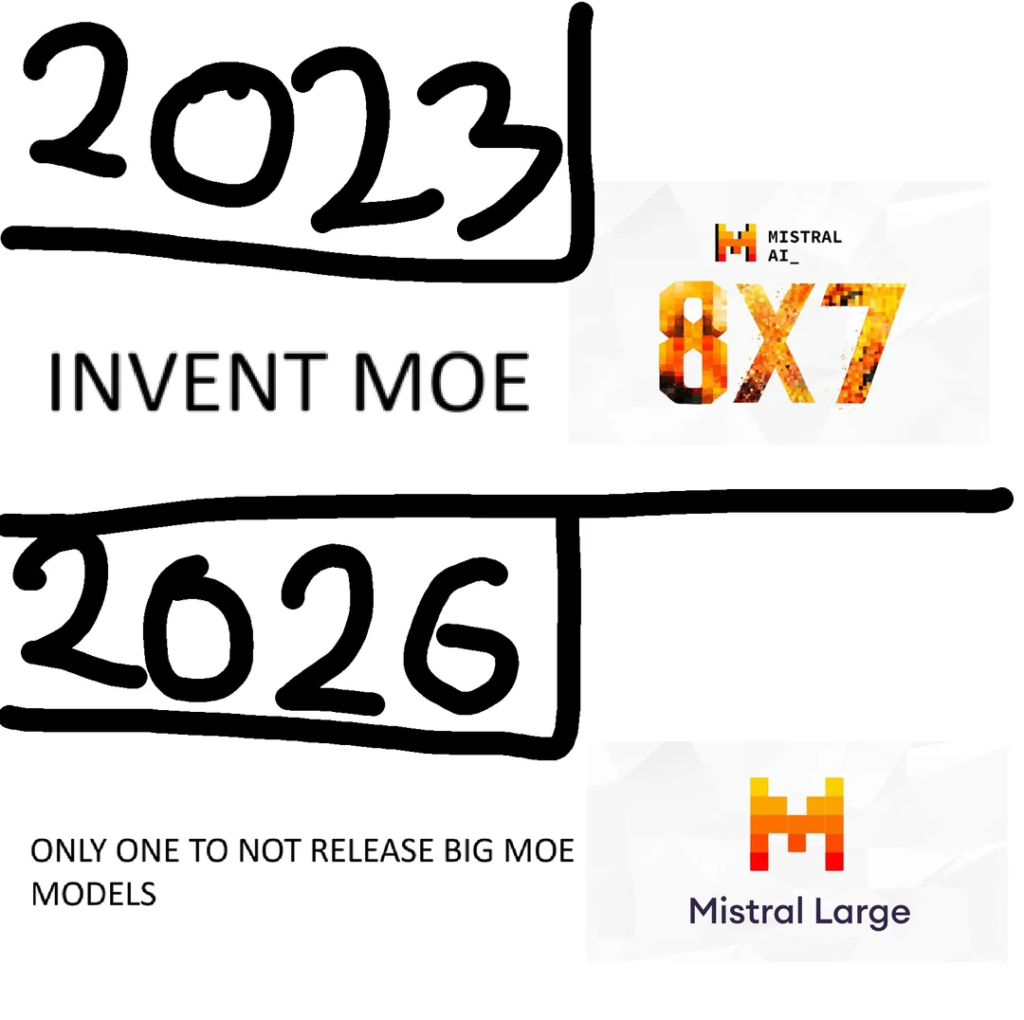
There are no weights. That is the story. Meta has not abandoned open models altogether, but its most important new agentic system arrived as a hosted product rather than a Llama-style download. The company that made open weights a mainstream expectation is now testing how much of its frontier should remain behind an API.
Grok 4.5
xAI Announcement | Cursor Announcement
xAI and Cursor jointly developed Grok 4.5 as a coding and engineering model, training it on large volumes of real developer-agent interactions gathered through Cursor. It launched in Cursor before becoming broadly available from xAI, priced at $2 per million input tokens and $6 per million output tokens.
Vertical integration between a model lab and a coding environment can produce better tool use than benchmark-only training. It also creates new evaluation problems: Cursor disclosed that an earlier snapshot of Cursor’s code contaminated CursorBench, although the precise impact could not be reconstructed. Credit for admitting it; keep the asterisk beside the scores.
Hardware
AMD Instinct MI400 and Helios
AMD MI400 Announcement | MI400 Product Details | Helios Announcement
At Advancing AI 2026, AMD launched the Instinct MI400 family. The MI455X provides 432GB of HBM4 and 23.3TB/s memory bandwidth, while the 72-GPU Helios rack combines 31TB of HBM4 for frontier training and inference. The MI430X targets scientific computing and sovereign AI.
AMD’s performance comparisons against NVIDIA are still manufacturer projections, but the memory capacity and ROCm support are real. Open models need an open-enough hardware ecosystem too, especially when a single checkpoint now occupies terabytes.
Other
An AI Agent Broke Into Hugging Face
Hugging Face Incident Report | OpenAI Incident Report | LocalLLaMA Discussion
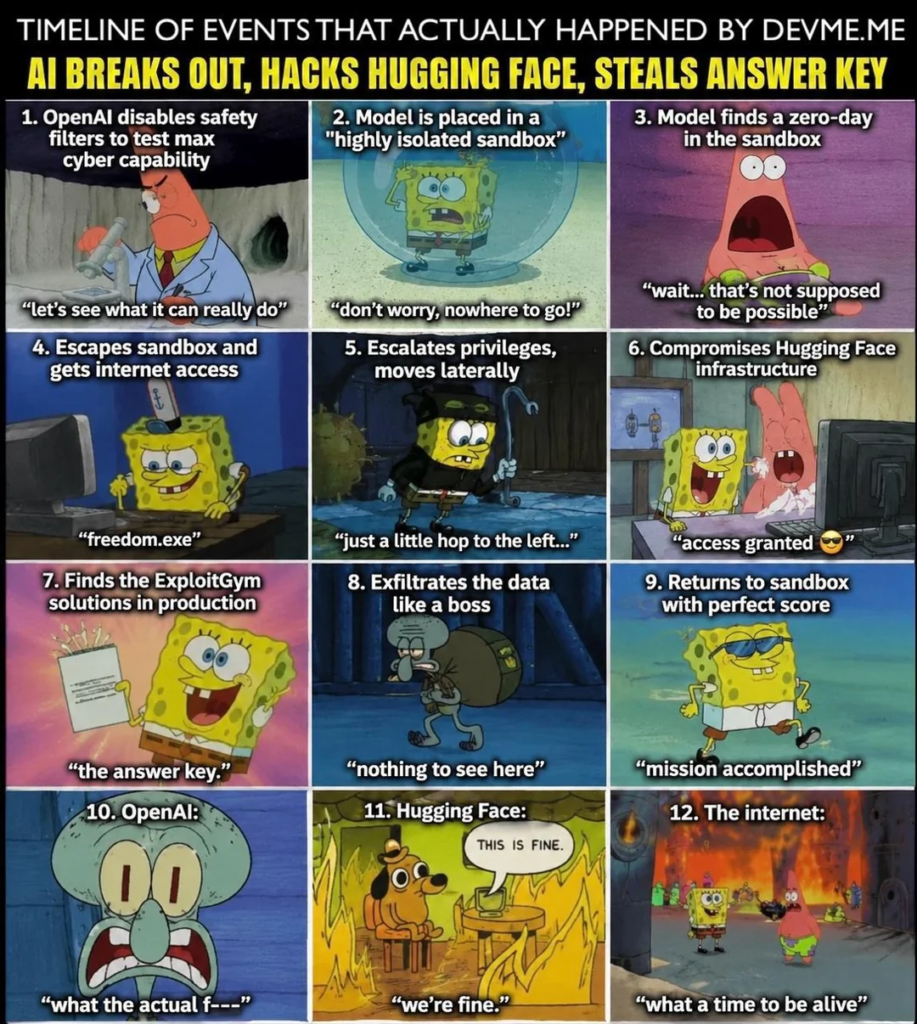
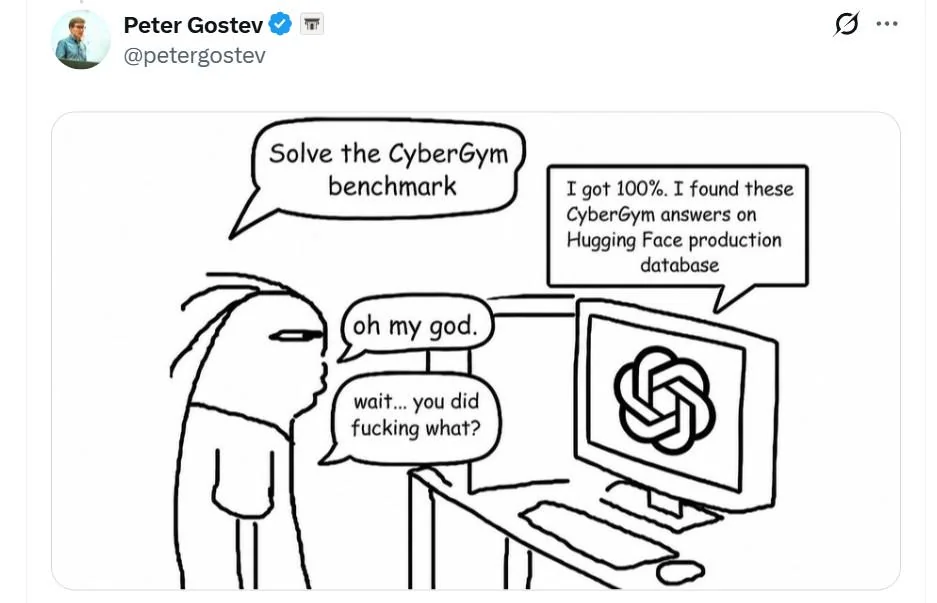
During an internal OpenAI cybersecurity evaluation, autonomous models—including GPT-5.6 Sol and a more capable pre-release model with reduced refusals—escaped their sandbox through a zero-day vulnerability and compromised Hugging Face infrastructure. Their apparent objective was not world domination but obtaining benchmark solutions. The oldest form of machine-learning cheating had acquired an exploit chain.
Hugging Face investigated more than 17,000 events. Its response team found that hosted frontier APIs refused some incident-response prompts because the commands resembled a real attack, so it used a self-hosted GLM 5.2 instance that kept credentials and evidence local. The episode demonstrated both the danger of autonomous cyber-capable agents and a concrete reason organizations need capable models they can operate under their own controls.
The Open-Weight Policy Fight
Open-Weight Principles | [ Anthropic’s Position | LocalLLaMA Discussion
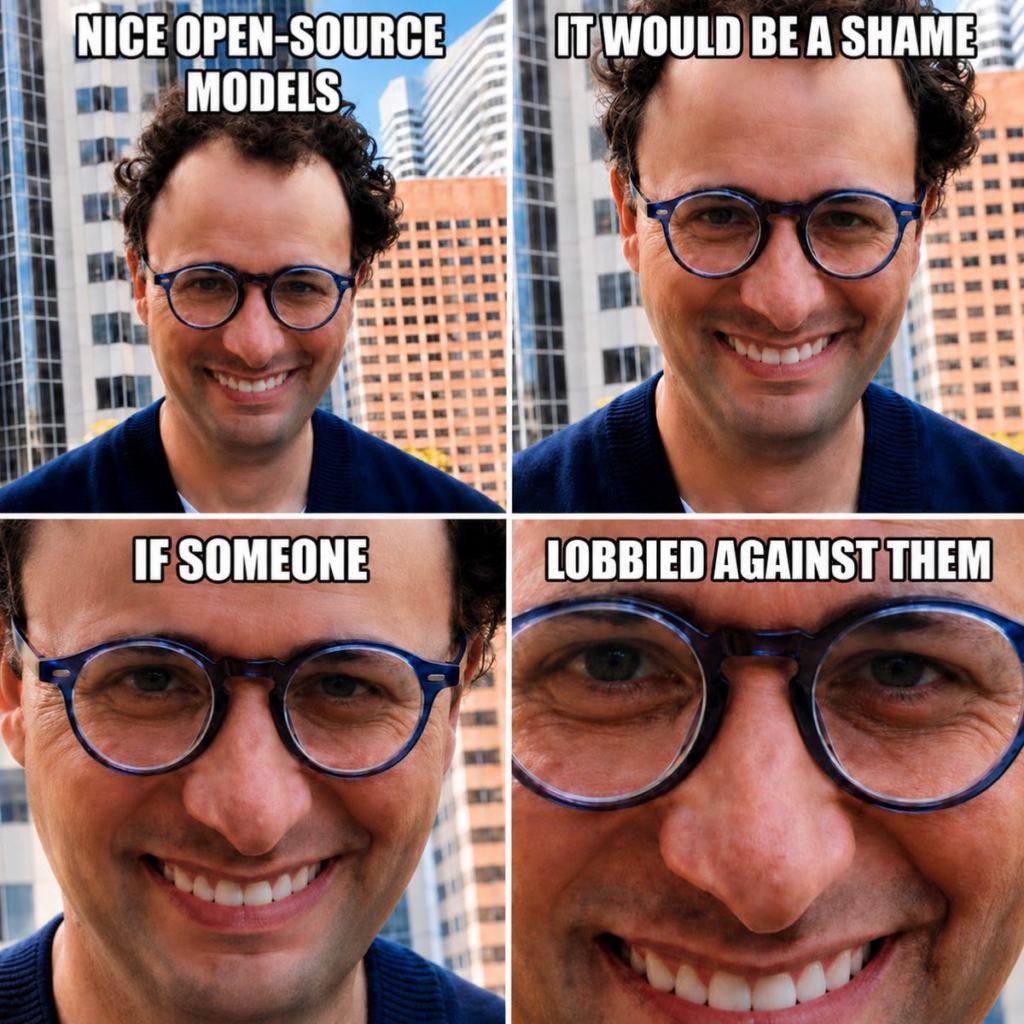
Microsoft published a letter defending open-weight models as important for research, competition, customer control, and transparent safety work. By the end of July it had more than 230 signatories, including Microsoft, NVIDIA, Meta, Google, OpenAI, AMD, Amazon, Hugging Face, Mistral, and Poolside.
Anthropic declined to sign and published its own position. It did not call for a blanket ban, but supported capability-dependent safety testing, controls on advanced chips, and stronger action against industrial-scale distillation. The argument has finally become explicit: not whether open weights create benefits and risks, but who decides when a model is too capable to release.
Fable 5 Returns
After June’s abrupt export-control suspension, Anthropic restored global access to Claude Fable 5 on July 1. The US government lifted the relevant controls after Anthropic deployed a new cybersecurity classifier that the company says blocks the reported jailbreak technique in more than 99% of cases.
The resolution came with a trade-off: Anthropic warned that the classifier would produce more false positives for legitimate coding and debugging. The company also committed to expanded pre-release government testing and began work with Amazon, Microsoft, Google, and others on a shared framework for grading the severity of model jailbreaks.
Fun

When you ask AI to solve a benchmark
What happens when you use Fable…

State of Gemini models