May 2026 was a massive month for AI, marked by Google’s I/O developer conference, major hardware announcements ahead of Computex, and significant shifts in the open-source landscape. The industry continues its rapid transition from conversational chatbots to autonomous agentic systems.
Models
Gemma 4 MTP Released
Google Blog: Multi-Token Prediction for Gemma 4 | HuggingFace: gemma-4-31B-it-assistant | HuggingFace: gemma-4-26B-A4B-it-assistant
The biggest open-source story of May was Google releasing Multi-Token Prediction (MTP) drafters for the entire Gemma 4 family. MTP extends the base model with a smaller, faster draft model that predicts several tokens ahead, which the target model then verifies in parallel. The result is up to 2x decoding speedup with zero quality loss, making these checkpoints ideal for low-latency and on-device applications. The E2B model even ships with a tiny 78M draft model, delighting the community with its efficiency. Multiple variants were released: 31B dense, 26B MoE (A4B active), E4B, and E2B.
Gemini 3.5 Flash and the Agentic Era
At Google I/O 2026, Google unveiled Gemini 3.5 Flash, positioning it as the engine for the „agentic era.” The model outperforms Gemini 3.1 Pro across almost all benchmarks while running four times faster than other frontier models. It was designed specifically for long-horizon agentic tasks, integrating deeply with Google’s new Antigravity 2.0 desktop application and the Gemini Enterprise Agent Platform. Google also introduced Gemini Spark, a 24/7 personal AI agent powered by 3.5 Flash that navigates digital life on behalf of users.
StepFun 3.7 Flash
HuggingFace: Step-3.7-Flash | HuggingFace: Step-3.7-Flash-GGUF
StepFun’s Step 3.7 Flash was a genuine surprise for the local inference community. It is a 196B total / 11B active MoE model with a built-in 1.8B ViT for vision, running locally on 128GB RAM. Benchmark highlights: SWE-Bench Pro at 56.26% (beating DeepSeek V4 Flash at 55.6% and matching Gemini 3.5 Flash at 55.1%), and DeepSearchQA F1 at 92.82%, competitive with GPT-5.5. StepFun also submitted a day-0 PR to llama.cpp, and uploaded official GGUFs themselves — a sign of genuine commitment to the local AI ecosystem. The community verdict: it „punches well above its active parameter weight on agentic and coding tasks.”
ByteDance’s Lance: Everything in 3B Parameters
Reddit r/LocalLLaMA: bytedance released an open source model | HuggingFace: bytedance-research/Lance
ByteDance’s Lance model attempts to do „just about anything with only 3B parameters.” Lance is a lightweight native unified multimodal model supporting image and video understanding, generation, and editing within a single framework — all with only 3B active parameters. It was trained entirely from scratch on a 128-A100-GPU budget using a staged multi-task recipe. The community joke was immediate: „I’ll grab one of my 40GB cards from the woodshed out back.” Lance is a remarkable demonstration of efficiency-first model design.
Needle: Distilling Gemini Tool Calling Into 26M Parameters
One of the most technically impressive community releases of the month came from an independent team. Needle is a 26M parameter model distilled from Gemini’s tool-calling capabilities, designed to run on-device for function calling and agentic workflows. The idea of fitting frontier-quality tool use into a 26M model captured the community’s imagination as a glimpse of where edge AI is heading.
NVIDIA Star Elastic: One Checkpoint, Three Models
NVIDIA’s Star Elastic introduced a novel approach to model deployment: a single checkpoint containing 30B, 23B, and 12B reasoning models with zero-shot slicing. Users can dynamically select which model size to run without downloading separate weights, making it highly practical for hardware-constrained environments.
GPT-5.5 Instant and Realtime Voice Models
OpenAI GPT-5.5 Instant Announcement | OpenAI Realtime Voice Models
OpenAI released GPT-5.5 Instant to free-tier users on May 5, replacing GPT-5.3 Instant as ChatGPT’s default model. More significantly, OpenAI launched a new generation of realtime voice models for the API on May 7, including GPT-Realtime-2, GPT-Realtime-Translate, and GPT-Realtime-Whisper, bringing GPT-5-class reasoning directly into the audio loop for natural, intelligent conversations.
Qwen 3.7-Max
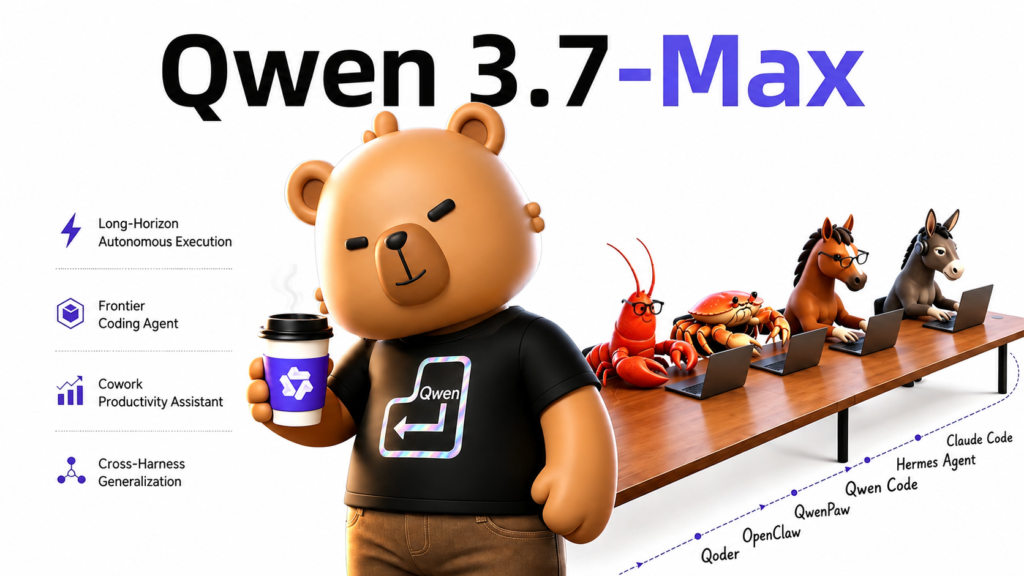
Alibaba launched Qwen 3.7-Max on May 19 as a proprietary, API-only frontier model. While Qwen 3.6 remains the open-weight option for self-hosted inference, 3.7-Max represents Alibaba’s commercial frontier offering with Qwen Studio providing comprehensive agentic functionality spanning chatbots, image and video understanding, and document processing.
Hardware
AMD’s Ryzen AI Halo Box
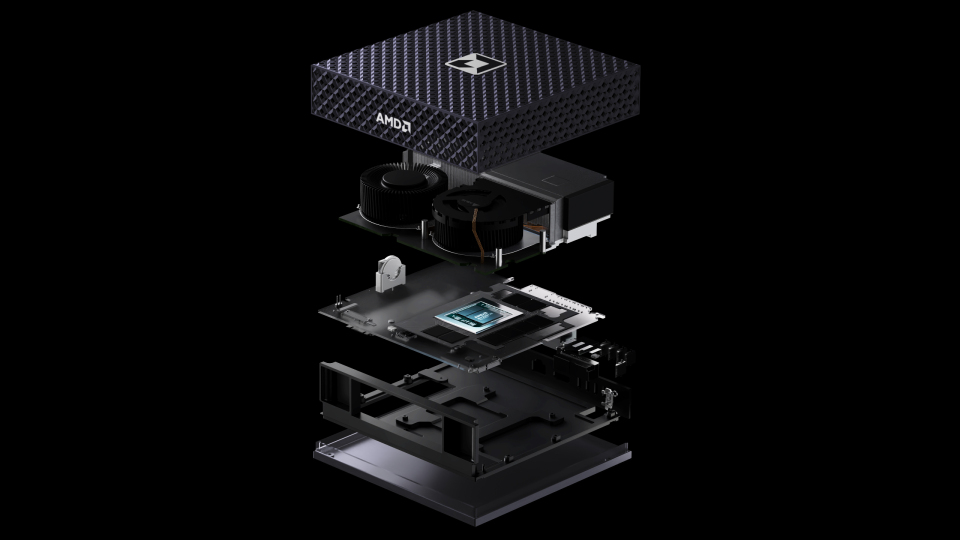
AMD confirmed the June launch of its highly anticipated Ryzen AI Halo Box mini-PCs, powered by the „Strix Halo” platform (Ryzen AI Max 400 series). These powerful small-form-factor workstations pack up to 192GB of unified memory, 16 Zen 5 cores, and RDNA 3.5 graphics [6]. Priced around $3,500-$4,000, they offer a compelling alternative to NVIDIA’s DGX Spark for local AI development and inference.
Computex 2026 Teasers
Ahead of Computex Taipei in early June, the hardware world was buzzing with anticipation. NVIDIA CEO Jensen Huang teased major announcements regarding the RTX Spark and new chips bringing AI directly to personal computers [7]. Meanwhile, Intel prepared to showcase its „Nova Lake” architecture and Arc G3 graphics, setting the stage for a massive hardware showdown in June [8].
Other
OpenAI Launches Self-Serve Advertising Platform
In a major shift for the AI industry’s business model, OpenAI introduced a self-serve Ads Manager platform for ChatGPT. The platform allows advertisers to create and manage campaigns directly inside ChatGPT, supporting both cost-per-impression and cost-per-click models [9]. With a reported target of $2.5 billion in ad revenue this year, this move signals the transformation of ChatGPT from a pure subscription service into a massive commercial advertising ecosystem.
Apple’s iOS 27 to Support Third-Party AI Models
Reports emerged that Apple’s upcoming iOS 27 will allow users to select third-party AI models (like Google Gemini or Anthropic Claude) to power Apple Intelligence features [10]. This „Extensions” system represents a significant opening of Apple’s ecosystem, giving users flexibility over which models handle text generation and image tasks across their devices.
Anthropic’s $1.5 Billion Wall Street Venture
Anthropic finalized a $1.5 billion joint venture with major Wall Street firms, including Blackstone and Goldman Sachs, to accelerate AI deployment across private equity portfolio companies [11]. The initiative involves embedding Anthropic engineers inside mid-sized businesses to implement AI systems, highlighting the growing demand for specialized deployment expertise to operationalize AI at scale.
Fun
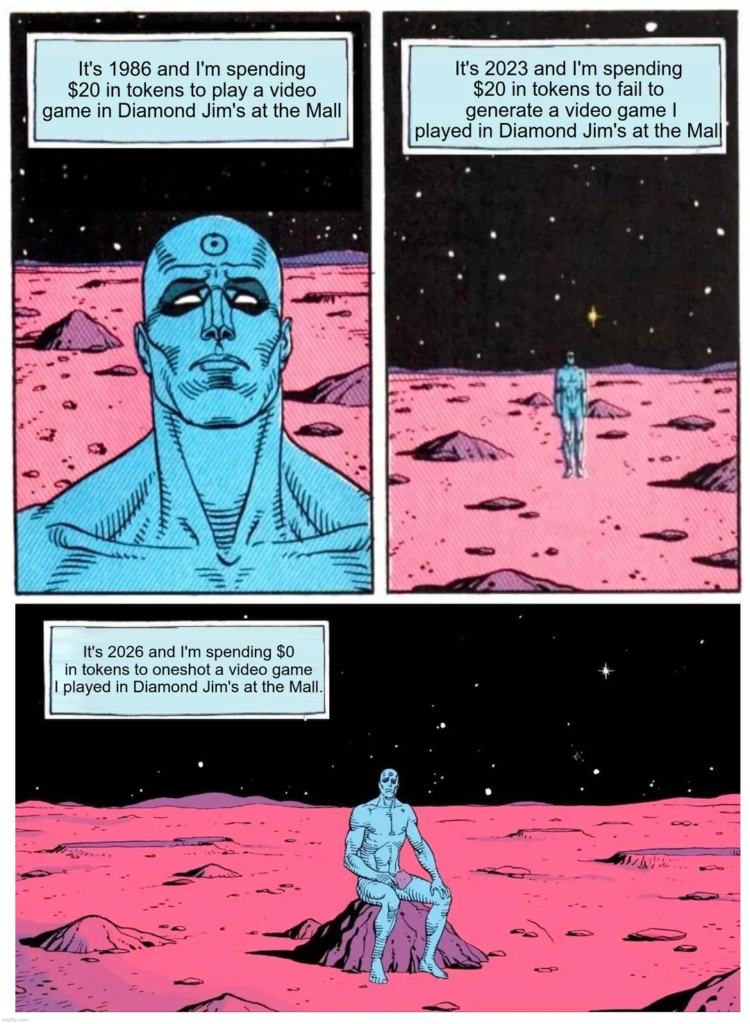
Dreams of 124B Gemma-4

Training joke

Yummy ram 🙂