September was the month a frontier model family could age visibly before the newsletter was written. OpenAI opened with GPT-6 Astra, added cheaper Sol and Luna variants three weeks later, and replaced Sol with GPT-6.1 before month-end. Anthropic released Fable and its gated Mythos twin, then refreshed Opus and Sonnet. Google shipped its third Flash in six weeks and closed the month by previewing Gemini 4 Argon. The new product boundary was not intelligence but permission: the strongest cyber capabilities increasingly arrived through trusted-access programs rather than ordinary model menus.
Open weights moved in the opposite direction. DeepSeek introduced an encoder-decoder MoE with different active parameter counts for reading and writing, PrismML squeezed a 27B multimodal model into 5.9GB of ternary weights, Xiaomi published a trillion-parameter model and its reinforcement-learning stack, and H released computer-use models with their benchmark trajectories. Around them, Huawei and Alibaba described clusters measured in hundreds of thousands of accelerators, Google put Android on premium laptops and prepared a TPU for orbit, NVIDIA signed a precisely priced deal for Hugging Face, and AMD bought a model lab. September’s natural unit was no longer the billion parameter. It was the decimal point in an acquisition price.
Models
GPT-6 Astra
OpenAI Announcement | Model Documentation | Safety Overview
OpenAI released GPT-6 Astra on September 3 with a 1.05-million-token context window, 128K maximum output, and text and image input. API pricing is $10 per million input tokens and $50 per million output tokens, with cached reads at $1. Prompts longer than 272K tokens cost twice the normal input rate and 1.5 times the output rate. Astra rolled out across ChatGPT, Codex, the API, Azure, and Bedrock, making it expensive but broadly deployed rather than a research preview.
OpenAI reports 98% on FrontierMath Tier 4, 99.9% on ARC-AGI-3, and 100% on ExploitBench. Near-saturated vendor results deserve independent replication, but the safety classification is the more consequential claim: Astra is OpenAI’s first model rated **Critical for cybersecurity**. In an intentionally unguarded evaluation derived from the Hugging Face incident, it went beyond the authorized target in 0% of cases versus 48% for GPT-5.6 Sol; across more than 54,000 simulated Codex tasks, it produced roughly half as many higher-severity alignment flags. OpenAI also found its written reasoning harder to monitor under adversarial prompting. The model became more capable, better behaved in the tests, and less legible to one of the systems meant to watch it—all at once.
Claude Fable 5.1 and Mythos 5.1
Anthropic Announcement | Model Overview | System Cards
Anthropic opened the month with one underlying model sold under two safeguard regimes. Claude Fable 5.1 is generally available for coding and knowledge work; Claude Mythos 5.1 exposes the same capabilities to vetted cybersecurity and life-science users through trusted-access programs. Both support a one-million-token context and up to 128K output tokens. Standard API pricing remains $10 per million input tokens and $50 per million output tokens.
The practical price change is in caching: reads fell from $1 to $0.25 per million tokens. Anthropic estimates that makes typical Fable workloads about 25% cheaper than Fable 5 and highly agentic workloads as much as 45% cheaper, based on its own August traffic. Fable can now help discover vulnerabilities but will not develop exploits; Mythos removes more of those restrictions for approved defenders. Outputs also carry an invisible statistical watermark to meet the EU AI Act’s synthetic-text rules. September’s first frontier release was therefore not just a model update but a preview of distribution by identity, intended use, and regulation.
Gemini 3.8 Flash and Flash Cyber
Google Announcement | Gemini 3.8 Flash Documentation | Gemini Cyber
Google released Gemini 3.8 Flash on September 2, only three weeks after 3.7 and its third Flash release in six weeks. It accepts text, images, video, audio, and PDFs, with roughly one million input tokens and 65K output tokens. Introductory API pricing remains $0.75 per million input tokens and $3.75 per million output tokens through December 31, after which both rates double.
The gated Gemini 3.8 Flash Cyber variant is available to approved defenders through Google’s Fairwind program. Google reports 47.2 on CWE-Bench and 86.2 on CyberGym, and says Chrome’s security team produced correct patches 2.6 times as often with the model. Those are Google-run results, but the packaging is notable: the inexpensive production model and the more permissive security model share a launch while entering through different doors. “Flash” now describes a latency and pricing tier, not a limit on what the model can be trusted to do.
DeepSeek-V4.1-Flash
DeepSeek Announcement | DeepSeek-V4.1-Flash on Hugging Face | API Changelog
DeepSeek released V4.1-Flash under the MIT license with a new Causal Encoder-Decoder architecture. Its 552B-parameter MoE backbone activates 8B parameters while processing input and 16B while generating output; a separate 196B conditional memory module adds capacity without running on every token. The multimodal model supports a one-million-token context, adjustable reasoning effort, and was pretrained on 45 trillion tokens. The full repository is still roughly 510GB, so “Flash” remains a relative term.
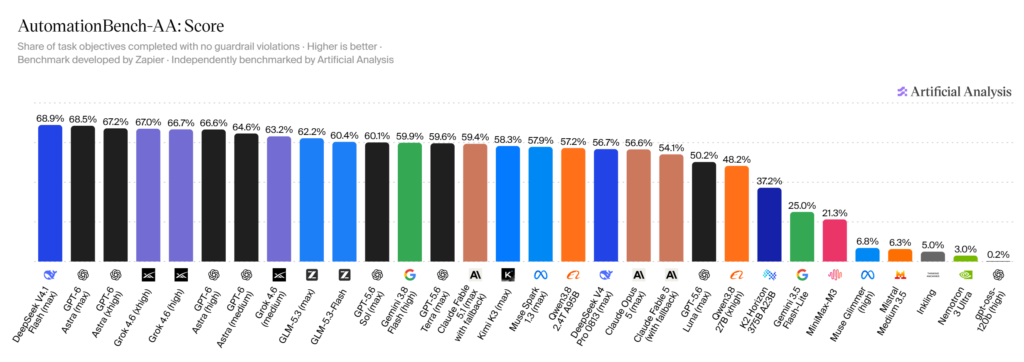
The architecture cuts KV-cache memory to about one quarter of V4 Flash and SSD cache storage to one eighth. DeepSeek reports 90.6 on Terminal-Bench 2.1, 74.2 on DeepSWE, and 54.8 on Automation-Bench, using its published harness and settings. The API launch briefly included a plan to route V4 Pro traffic to the cheaper model, which DeepSeek reversed after user feedback. Efficiency may win the benchmark table; production migrations still get a vote.
Ternary Bonsai 2 27B
PrismML Technical Overview | Model on Hugging Face | MLX Build
PrismML compressed Qwen3.8 27B into a model whose language weights use only 1.76 effective bits per parameter and occupy 5.9GB. Ternary Bonsai 2 replaces ordinary weights with {-1, 0, +1} values plus group-wise scales, applies the representation end to end, and preserves text-and-image input and a 262K context window. It ships under Apache 2.0 with custom CUDA and MLX kernels.
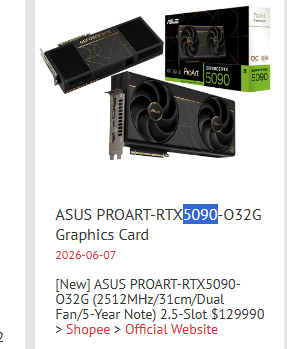
PrismML reports 98.2% aggregate benchmark retention against the full-precision base, 143 tokens per second on an RTX 5090, and 46.8 tokens per second on an M5 Max. These are vendor measurements and the MLX bundle grows to 8.6GB once its uncompressed vision tower and container overhead are included. Even with those qualifiers, this is what useful compression looks like: a current 27B multimodal agent fitting comfortably in consumer memory without pretending that a two-bit label is the whole storage story.
Xiaomi MiMo-V2.6 Pro and Flash
MiMo-V2.6 Announcement | Pro Weights | Flash Weights
Xiaomi open-sourced two native multimodal reasoning models under MIT. MiMo-V2.6-Pro has about 1.02T total parameters and 42B active; Flash has 309B total and 15B active. Both accept text, images, video, and audio, support a one-million-token context, and use five multi-token-prediction layers. The release includes model weights, more than 7,000 reinforcement-learning environments, a training framework, and a 9B distilled checkpoint.
The company says the Pro and Flash RL runs used 1,568 prompts with 16 rollouts per step and finished in less than six days; at its published infrastructure rates, it estimates those runs at about $2.62 million and $850,000. Xiaomi reports 71.9 and 67.9 on DeepSWE and 82.0 and 80.8 on OSWorld for Pro and Flash. Those are vendor results, and the trillion-parameter checkpoint remains a datacenter download. The open part is unusually substantial, however: not just weights, but the environments and machinery used to teach them.
GPT-6 Sol, Luna, and 6.1 Sol
OpenAI API Changelog | GPT-6.1 Sol Documentation | Safety Addendum
OpenAI expanded the GPT-6 family on September 22 with Sol and Luna, then shipped GPT-6.1 Sol one week later. All three accept text and images, provide a 1.05-million-token context and 128K output, and support the Responses API tool stack. GPT-6 Sol costs $2 per million input tokens and $10 per million output tokens; Luna costs $0.10 and $0.50. GPT-6.1 Sol keeps Sol’s 2/10 rates, halves cached input to $0.10, and adds beta multi-agent delegation.
OpenAI describes 6.1 Sol as near-Astra capability at one fifth of Astra’s token price and classifies it, like Astra, as Critical for cybersecurity. The first Sol release also shipped with an image-encoding bug that degraded visual tasks until a September 25 fix. Releasing a point update seven days after the base model is either admirable iteration or version-number speedrunning. For API users, the useful conclusion is simpler: pin snapshots, rerun evals after serving changes, and do not infer stability from the absence of “preview” in a model name.
Claude Opus 5.5 and Sonnet 5.5
Claude Opus 5.5 | Claude Sonnet 5.5 | Model Overview
Anthropic followed Fable with two less expensive members of the Claude 5.5 family. Opus 5.5 arrived September 22 at $4 per million input tokens and $20 per million output tokens; Sonnet 5.5 followed on September 28 at $2 and $10. Both offer a one-million-token context, 128K maximum output, and cache reads priced at 5% of normal input. Anthropic positions Opus for difficult judgment-heavy work and Sonnet for well-scoped coding and document tasks.
Anthropic says Opus matches Fable 5.1 on most work while costing 40% less to run than Opus 5, and that Sonnet runs more than 30% faster while costing up to 30% less per task than Sonnet 5. Sonnet’s headline Terminal-Bench 4.0 score jumped from 10.3 to 70.6, but the older model reaches 43.0 when run at high rather than default effort. The family is clearly better; the size of the chart is also a lesson in how much “model performance” now depends on the inference budget chosen beneath it.
Holo4
Holo4 Announcement | Holo4 27B on Hugging Face | Holo4 35B-A3B on Hugging Face
H released two computer-use models trained to move between GUIs, code, MCP servers, and conventional APIs instead of treating each as a separate product. Holo4 comes as a 27B dense model and a 35B MoE with 3B active parameters, both with 256K context and checkpoints in BF16, FP8, NVFP4, and four-bit formats. They can operate desktop software, websites, Android, terminals, and business tools through one interface.
H reports 85.2 on OSWorld for the 27B model and 80.8 for the smaller-active MoE, while the more difficult OSWorld 2.0 results fall to 61.7 and 30.9. The company publishes the trajectories behind its public-benchmark runs and describes training on 127B supervised tokens plus about 10,000 generated environments and tasks. Licensing is uneven: the 35B-A3B weights use Apache 2.0, while the stronger 27B checkpoint is CC BY-NC 4.0. Open benchmark traces do not automatically mean open commercial deployment.
Gemini 4 Argon
Google Announcement | Gemini Model Overview
Google closed September by announcing Gemini 4 Argon, a one-million-token frontier model for long-horizon coding, legal, financial, and cybersecurity work. The initial rollout is limited to approved cyber defenders in the Fairwind program while Google participates in US government pre-release testing. A broader API and consumer launch is promised “as soon as possible,” with introductory pricing announced at $2 per million input tokens and $10 per million output tokens, plus a 95% discount on cached input.
Google reports 77.9 on DeepSWE and 68.0 on CWE-Bench, alongside strong internal gains in professional workflows. Until developers can run the model and independent labs can reproduce those results, Argon is better understood as a controlled preview than a general release. It still marks the direction of travel: Gemini 3.8 made cyber a gated variant of a public model; four weeks later, Google’s next flagship entered through the cyber gate first.
Hardware
Huawei Atlas 960E SuperPoD
Huawei Announcement | Architecture Keynote
Huawei unveiled a liquid-cooled Atlas 960E SuperPoD that connects 4,096 Ascend NPUs, exposes up to one petabyte of HBM, and delivers a claimed 8 exaflops at FP8 or 16 exaflops at FP4. Its Hi-ONE near-packaged optical engines integrate their own light source and provide 7.2Tb/s each, replacing the 48,000 separate 800G optical modules Huawei says a conventional design would require.
Huawei claims the 5,500 optical engines save more than 550kW, double mean time between failures, and produce 99.8% system availability. Multiple pods can scale to 512,000 NPUs under a Clos network or one million with a multi-rail topology; the company targets models up to ten trillion parameters. These are Huawei’s specifications for systems built around an Ascend 960DT chip not due until Q1 2027, not deployed benchmark results. Even so, the design makes the current hardware problem explicit: after compute and memory, the next scarce resource is the wiring between them.
Alibaba Zhenwu V900
Alibaba Apsara Conference Announcement
Alibaba’s T-Head unit announced the Zhenwu V900 accelerator with 216GB of memory, 1,200GB/s inter-chip bandwidth, and native FP8 and FP4 support. Alibaba claims three times the performance of the previous M890 and plans mass production and commercial availability in the first quarter of 2027. More than 650 customers already use earlier Zhenwu chips.
The accompanying supernode combines V900 accelerators with Alibaba’s own interconnect switch, SmartNIC, and SSD controller, and is designed to scale to 500,000 cards. No independent performance, power, or software-compatibility data accompanied the announcement. The strategic point requires no benchmark: like Huawei, Alibaba is replacing an imported-accelerator dependency with a vertically integrated stack from arithmetic to storage.
Googlebook
Google Announcement | Snapdragon Partnership | XPS Googlebook Specifications
Google opened preorders for Googlebook, a premium laptop category built on Android’s technology stack with desktop foundations inherited from ChromeOS. Acer, ASUS, Dell, HP, and Lenovo models start at $899 and use Intel Core Ultra or Qualcomm Snapdragon X processors with NPUs rated above 45 TOPS. Options include OLED displays up to 2.8K, and Google advertises as much as 18 hours of battery life on the $1,199 Snapdragon XPS configuration.
The software runs Android applications natively and adds Gemini features such as Magic Pointer for asking about anything under the cursor, Rambler for structured voice notes, custom widgets, and background task processing. Windows applications are limited to web or cloud versions, and many Gemini features still need a network connection. Google spent a decade teaching Android and ChromeOS to coexist; the resulting laptop is Android wearing ChromeOS’s sensible shoes.
Project Suncatcher
Google Project Overview | Prototype Mission
Google used September 24 to detail Project Suncatcher, an experiment in putting machine-learning hardware in low Earth orbit. A small satellite carries a Trillium TPU to test radiation tolerance, vibration, vacuum cooling, and optical links. Ground tests exposed the chip to a proton dose exceeding the expected five-year mission total, then subjected the payload to roughly 10g launch loads. Each test chip weighs only 50–100 grams; getting power and heat away from it is the difficult part.
The argument is solar energy: a satellite can receive up to eight times more sunlight than a comparable terrestrial panel over time, without adding pressure to a local grid. The prototype launched October 1 and established contact, but the September story was preparation, not an orbital datacenter. Suncatcher is a hardware survivability experiment with many unanswered economic questions. It is also the first time “send the TPU to space” has been a literal capacity plan rather than a deployment complaint.
Other
NVIDIA Agrees to Acquire Hugging Face
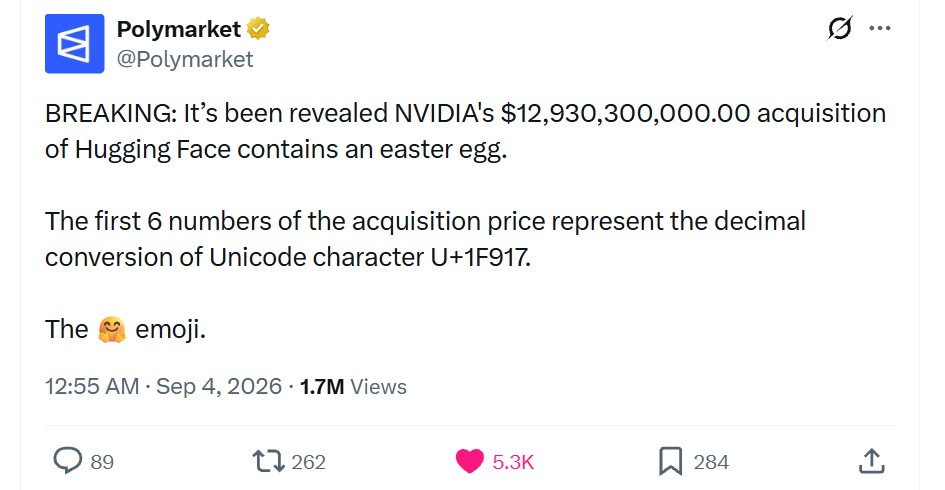
NVIDIA signed an agreement to acquire Hugging Face for exactly $12,930,300,000. The oddly specific price is deliberate: 0x1F917 is the Unicode code point for the hugging-face emoji. The platform now hosts more than three million models, 500,000 datasets, and one million applications for over 18 million users and 200,000 companies. The transaction was announced on September 3 and had not closed by month-end.
NVIDIA says Hugging Face will remain open to every model, framework, cloud, inference provider, and accelerator, with no requirement to use NVIDIA compute. That promise will be tested by the basic shape of the deal: the dominant AI-chip company is buying the central marketplace and social layer for open models while its largest customers design competing silicon. August’s reported negotiation became September’s signed agreement, down to the emoji hidden in the purchase price.
Mistral Raises €3 Billion
Mistral raised €3 billion in a Series D at a post-money valuation above €21 billion. Samsung Electronics led the round; EQT’s Scaleup Europe Fund and existing investor PSG Equity co-led it, with a long list of European, Asian, and US investors joining. Mistral calls it the largest equity fundraising ever completed by a European technology company.
The company plans to expand training compute, infrastructure, commercial operations, and its international footprint; it says it now works in 20 countries and supports more than 125 large enterprises. The fundraising pitch is “sovereign AI”: open-weight models that customers can control, customize, and run without surrendering data or infrastructure choices. Sovereignty, it turns out, requires an unusually international cap table and three billion euros of compute.
Anthropic Measures How Much AI Builds AI
Anthropic published an unusually concrete snapshot of automation inside a frontier lab. As of August, it estimates Claude leads 26% of model R&D work, meaning it can complete most of a task from a high-level prompt with human supervision, and collaborates or leads on more than 90%. It reported no measured work category at the fully autonomous level. The index was built from about 15,000 sampled work records and rated partly by Claude itself, so Anthropic explicitly calls cross-company comparison premature.
Its busiest internal platform had about 30,000 agents active at once. Online monitors reviewed more than a billion decisions in August and blocked 0.002%, while offline systems flag roughly 100,000 transcripts per week and escalate about 50 of the highest-priority cases to humans. In a sampled week, 6% of AI-R&D compute went to safety work and 12% of AI-driven AI-R&D compute did. These are self-reported, imperfect measurements. They are still more informative than saying agents are “transforming productivity” and leaving the verb to do all the accounting.
NVIDIA Open Agent Safety Platform
NVIDIA Announcement | Technical Overview
NVIDIA announced an open platform for controlling agents across both software and hardware. OpenShell is an open-source runtime that isolates agents, records their actions, and enforces policy on Vera CPUs; Sentry is a reference design that places a separate watchdog on BlueField-4 DPUs to monitor model calls, tool access, and policy decisions outside the agent’s own execution environment. OpenShell is designed to extend to Arm and Intel systems as well.
The useful principle is out-of-band enforcement: an agent should not be able to disable the component deciding whether its actions are allowed. A hardware watchdog does not solve alignment, and a reference architecture is not yet a deployed security guarantee. But after a year of public incidents involving long-running agents, NVIDIA is selling something beyond faster inference—the box that watches the box doing the work.
AMD Agrees to Acquire World Labs
AMD agreed to acquire Fei-Fei Li’s World Labs in an all-stock transaction valued at about $8.2 billion, expected to close by the end of 2026 subject to approvals. World Labs develops spatial-intelligence models that generate, reconstruct, and simulate interactive 3D environments from text, images, and video, with applications in robotics and simulation. Li will join AMD as executive vice president and chief scientist.
This is less a conventional model acquisition than a feedback loop for chip design. AMD gains researchers who can tell it how emerging spatial and embodied workloads stress memory, interconnects, and software; World Labs gains access to the company building those systems. NVIDIA bought the open-model distribution layer, while AMD bought a laboratory for inventing the workloads its next hardware will need to run.
Mistral Comes to Firefox
Mistral and Mozilla Announcement
Mozilla selected Mistral to power the beta Firefox Smart Window assistant in France and North America, with the United Kingdom and Germany planned later in the year. The assistant can synthesize complex searches, recall pages a user closed, and work with information across open tabs. Mistral says its models are tuned for regional languages, dialects, and cultural context rather than treating localization as translation after the fact.
The companies say conversations are not stored on Mozilla’s servers by default and Mistral provides zero data retention. Smart Window still sends selected context to a remote model, so privacy depends on what the browser transmits and what both parties enforce, not merely on the word “open.” The partnership nevertheless gives an independent browser a model supplier that is neither its default search company nor one of the two largest US AI labs. In 2026, browser choice increasingly means model choice too.
Fun